


Many industrial equipment, automotive accessories, and mechanical assembly components rely heavily on die casting structures, yet most buyers only focus on surface dimensions and unit prices while overlooking core hidden defects that cause frequent equipment failures, shortened service life, and unexpected maintenance costs. Poorly manufactured die casting parts lead to air holes, porosity, uneven wall thickness, low structural strength, and unstable dimensional tolerance, all of which quietly damage overall production stability and increase long-term operating expenses. Choosing reliable aluminum alloy die casting components becomes the fundamental solution to avoid repeated losses and optimize whole-machine matching performance.
Irregular internal porosity remains the most underappreciated hidden quality issue in ordinary die casting products. Tiny invisible pores inside aluminum castings will gradually expand under high temperature, vibration, and long-term load operation, resulting in leakage, fracture, deformation, and sealing failure. Mass-produced low-cost castings rarely undergo strict vacuum degassing and precision pressure testing, so quality problems only appear after installation and operation, bringing unnecessary downtime and assembly rework. Professional customized die casting processing strictly controls molten aluminum purity, mold cooling speed, and casting pressure parameters to eliminate internal microscopic defects from the source.
Unstable dimensional accuracy directly affects assembly matching efficiency and product interchangeability. Massive non-standard die casting parts often have tolerance deviations exceeding industry standards, requiring secondary polishing, cutting, and manual trimming on the production line. These extra procedures waste labor hours, delay delivery cycles, and reduce batch assembly consistency. Large-batch standardized die casting production adopts digital mold opening and full-size detection, ensuring each finished part maintains highly consistent specifications that fit perfectly with supporting mechanical structures without additional processing adjustment.
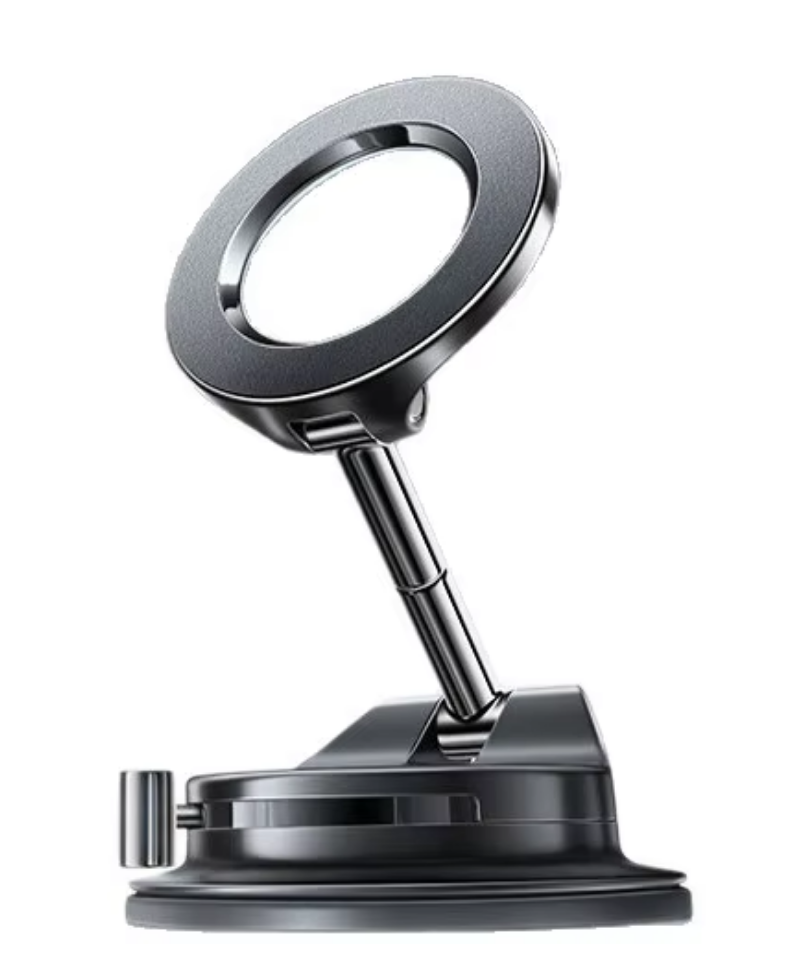
Corrosion resistance and compressive strength mismatches frequently cause premature scrapping of aluminum die castings in harsh working environments. Parts used outdoors, near chemical media, or under frequent impact loads demand high-density alloy structure and stable surface treatment. Generic cast aluminum materials have loose internal organization, poor oxidation resistance, and low pressure bearing capacity, easily rusting, cracking, and deforming during continuous operation. Mature die casting enterprises optimize alloy ratio formula and adopt multi-layer anti-corrosion surface treatment to adapt to complex working conditions for extended service cycles.
Long-term after-sales risk and mold customization barriers trouble countless small and medium manufacturing enterprises. Many suppliers cannot provide complete mold development, batch production, post-processing, and follow-up dimensional tracking services. Cooperating with professional aluminum die casting enterprise covers full-process services including mold design, rapid sample making, mass production, CNC finishing, surface anodizing, painting, and quality inspection, greatly reducing supply chain risks and one-time mold investment costs for customers.
Performance Comparison Of Ordinary Die Casting Parts & Premium Precision Aluminum Alloy Die Casting Parts
| Performance Index | Ordinary Low-Cost Die Casting Parts | High-Precision Custom Aluminum Alloy Die Casting Parts |
|---|---|---|
| Internal Structure Density | High porosity, obvious air hole defects | Compact structure, vacuum degassing treated, no hidden pores |
| Dimensional Tolerance Range | ±0.15mm~±0.3mm, large deviation | ±0.02mm~±0.05mm, ultra-precise control |
| Working Temperature Adaptability | -20℃~120℃, easy deformation at high temperature | -40℃~180℃, stable structure under continuous high temperature |
| Surface Smoothness | Rough surface, obvious parting line burr | Smooth finished surface, no burr, direct assembly available |
| Service Life Under Load | 6–12 months, easy fatigue fracture | 2–5 years, excellent fatigue resistance and impact resistance |
| Sealing Performance | Poor airtightness, easy oil and gas leakage | High airtightness, suitable for hydraulic and pneumatic sealed structures |
| Post-Processing Requirement | Frequent manual polishing and trimming | Almost no secondary processing, direct batch assembly |
Most users misunderstand that higher material weight means better product quality. In fact, qualified aluminum alloy die casting parts pursue compact density rather than simple thick wall design. Excessively thick casting walls will cause slower cooling, more serious internal shrinkage cavities, and heavier overall equipment weight, increasing energy consumption and mechanical burden. Precision die casting adopts reasonable thin-wall lightweight structure design, realizing both lightweight equipment and higher structural load-bearing capacity at the same time.
Surface treatment quality directly determines the environmental adaptability of die casting parts. Simple spray painting easily falls off, discolors, and corrodes after short-term use. Standard professional processes include anodizing, passivation, sandblasting, electrophoretic coating, and powder spraying, forming firm protective layers that resist wear, oxidation, ultraviolet radiation, and mild chemical erosion. Different surface treatment schemes can be matched according to indoor, outdoor, humid, oil-contacted, and high-wear working scenarios.
Batch stability is another core demand ignored by bulk purchasers. Random quality differences between individual parts lead to mixed qualified and unqualified products in the same batch, causing chaotic assembly quality and unstable finished machine performance. Full-inspection production mode combines three-dimensional coordinate detection, pressure leakage testing, hardness testing, and appearance inspection to ensure unified quality of every single product in large-batch orders.
In summary, selecting aluminum alloy die casting parts cannot only compare unit prices and delivery time. Deeply solving internal porosity, dimensional deviation, insufficient strength, poor weather resistance, and unstable batch quality fundamentally improves production efficiency, lowers comprehensive cost, and extends overall equipment operation cycle. Scientific customized die casting solutions match actual working conditions, avoid hidden long-term faults, and bring sustainable practical value to mechanical processing, automobile matching, intelligent equipment, and various industrial supporting fields.